How to Store Dubai Chocolate
The best way to store Dubai chocolate is in a cool, dry place away from direct sunlight, heat and humidity. The goal is to protect both the chocolate shell and the crisp kataifi filling. In a hot climate, refrigeration may be necessary, but poor wrapping can introduce moisture and soften the pastry.
How to Store Dubai Chocolate Properly
- Keep it cool. Avoid warm kitchens, cars, windowsills and other places where chocolate can soften or melt.
- Keep it dry. Humidity can damage the chocolate surface and reduce the crunch of kataifi.
- Use an airtight container. This limits moisture and protects the bar from absorbing odors.
- Keep it away from strong-smelling foods. Chocolate and nut fillings can pick up surrounding aromas.
- Follow the manufacturer’s label. Packaged products may have specific storage instructions based on their formulation.
Does Dubai Chocolate Need to Be Refrigerated?
Not always. If the room is consistently cool and dry, many chocolate products are better kept outside the refrigerator because refrigeration can introduce condensation.
However, if your home is hot enough for the chocolate to soften or melt, refrigeration is the more practical option. Wrap the bar tightly or place it in an airtight container before chilling it.
How Refrigeration Can Affect Kataifi
The signature texture of Dubai chocolate comes from crisp toasted kataifi. Moisture is the enemy of that crunch. Condensation can soften the pastry even when the chocolate itself remains safe to eat.
To reduce condensation, keep the bar sealed while it warms back toward room temperature before opening the container.
If you want to understand why the pastry matters so much, see what kataifi is in Dubai chocolate.
Can You Freeze Dubai Chocolate?
You can freeze many chocolate products, but freezing is not ideal for texture. Ice crystals and condensation can affect the shell and filling, especially the kataifi.
If freezing is necessary, use a tightly sealed, moisture-resistant container. Thaw the chocolate gradually while it remains sealed so condensation forms on the outside of the packaging rather than directly on the bar.
How Long Does Dubai Chocolate Last?
Shelf life depends on the recipe, packaging and storage conditions. Commercial bars can have very different best-before periods because manufacturers use different fillings and production methods. Homemade bars generally do not have the same controlled packaging or shelf-life testing.
For packaged chocolate, use the printed best-before date and storage instructions. For homemade versions, freshness and texture often decline before there is an obvious safety issue, especially once kataifi loses its crispness.
Signs the Quality Has Declined
- The chocolate has melted and reset repeatedly.
- The kataifi is soft instead of crisp.
- The filling smells stale or rancid.
- The bar has absorbed refrigerator or pantry odors.
- The surface shows heavy condensation or moisture damage.
A pale or streaky surface can sometimes be chocolate bloom rather than spoilage, but quality may still be reduced.
Best Storage for Homemade Dubai Chocolate
Homemade Dubai chocolate deserves extra care because you know exactly what went into it but usually do not have commercial packaging.
- Let the finished bar set completely before wrapping.
- Use parchment or food-safe wrapping plus an airtight container.
- Keep batches away from steam and humidity.
- Make smaller quantities if texture is your priority.
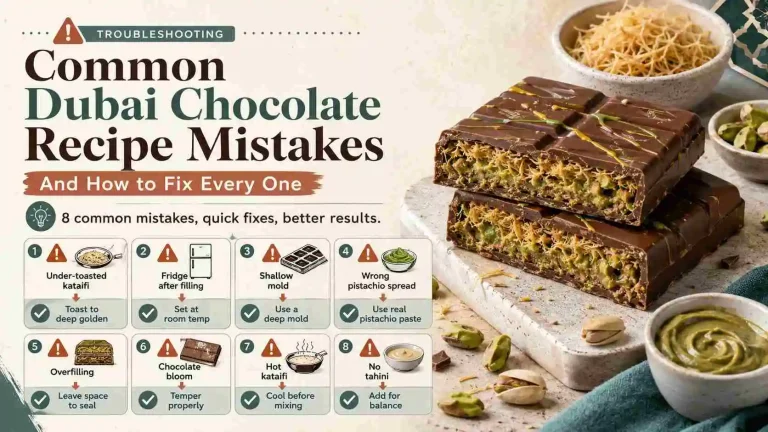
See our Dubai chocolate recipe and common Dubai chocolate recipe mistakes for more practical guidance.
Storage by Situation
| Situation | Best approach |
|---|---|
| Cool, dry room | Airtight container away from light and heat |
| Hot climate | Refrigerate in airtight wrapping |
| Short transport | Insulated bag if temperatures are high |
| Long-term freezing | Tightly seal and thaw gradually while wrapped |
| Homemade bar | Small batches, airtight storage, protect kataifi from moisture |
Frequently Asked Questions
Should Dubai chocolate be kept in the fridge?
Only when room temperature is too warm for stable storage or when the manufacturer specifically recommends refrigeration. Use airtight packaging to reduce moisture exposure.
Why did my Dubai chocolate lose its crunch?
Humidity, condensation or moisture from the filling can soften kataifi. Keeping the bar tightly sealed and avoiding temperature swings helps preserve texture.
Can melted Dubai chocolate be saved?
If it simply softened from heat and remained otherwise properly stored, it may reset when cooled, but the chocolate surface and filling texture can change.
Bottom Line
Store Dubai chocolate cool, dry, sealed and away from light. Refrigerate when heat makes room-temperature storage impractical, but protect the bar from condensation. Preserving the kataifi crunch is the main difference between storing Dubai chocolate and storing a simple solid chocolate bar.